Finding the key is obviously very important as all songs are written in specific keys that will determine which chords and notes work well together. Below we’ve listed a few ways to help you learn how to find the key of a song.
Method 1: Moises’ AI Key Detection Feature
One of the easiest ways to correctly identify the key of a song is using Moises’ AI Key Detection technology. This song key finder works like magic with the power of AI. After you upload your song it will instantly tell you the song’s key, along with the chords! Not only can you find the key of a song, but Moises allows you to change it as well. You never have to worry about having the sheet music, learning complex music theory, or stifling the creative process by getting stumped on what key the song is in. With Moises, you can unleash your genius with no limits!
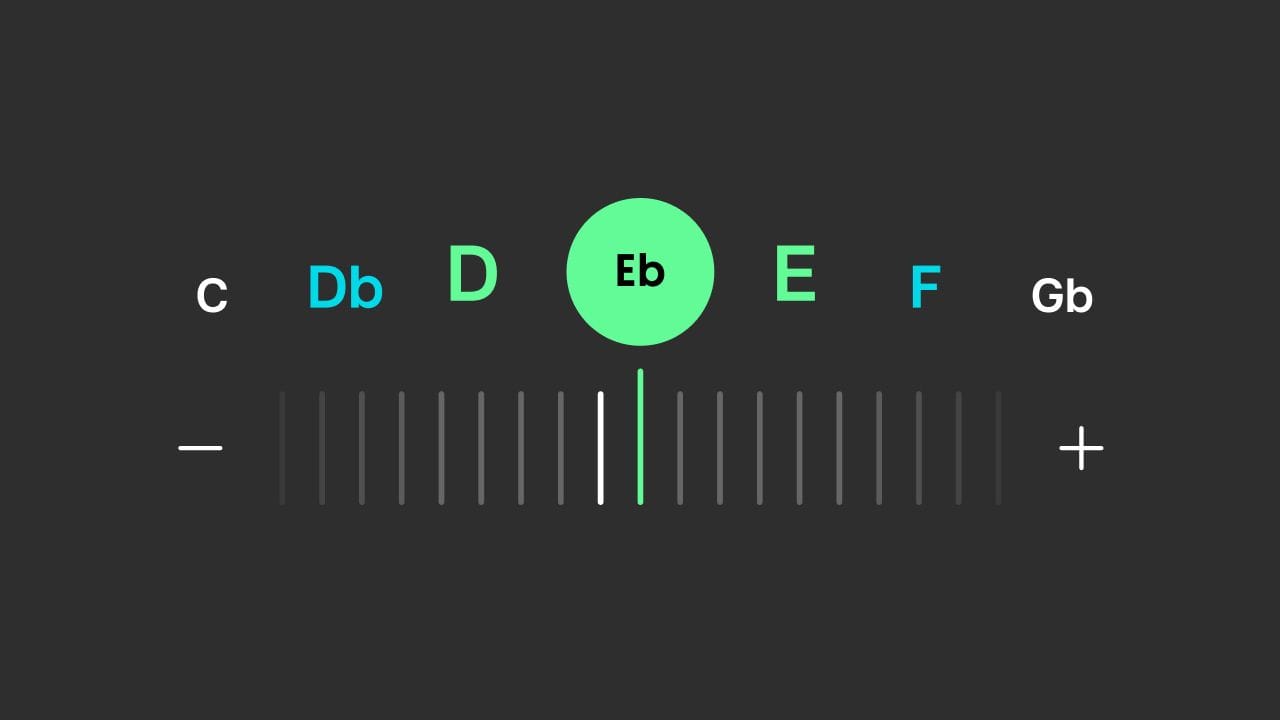
How does it work? Simply choose the song you’d like to find the key of and upload from your library or any public URL, and boom! Just like that Moises AI will detect the song key and chords, it will also separate the vocal and instrument tracks for your convenience. Then if you want too, open the Pitch Changer and dial one semitone at a time until you find a suitable key for you. After changing the music key, the chords will appear in real-time!
Method 2: Key Signatures
If you’re looking to learn to do this on your own without any software, the oldest way to find the key of a song is to look at the sheet music for your specified song and identify the key signatures.
A key signature is a visual symbol, printed on a musical staff, that indicates what key a section of music is written in. Key signatures are an easy way to find the key of any song, but only if the sheet music uses them, if the sheet music doesn’t include any key signatures, you’ll have to use another method. For a deeper understanding on identifying and using key signatures, see the video:
Method 3: Notes in a Key
If you’re using a musical instrument, such as a guitar or piano, one way of learning how to find the key of a song is by first determining if the song is in a major or minor key. Does the song sound happy, energetic, cheerful? Or does it sound melancholy and gloomy? Once you’ve identified if the song is major or minor, you can then- using your musical scales on your instrument- figure out the notes that work within that key. A helpful guide would be to reference a chart to determine what notes fit within a key (for example, in the key of G you have notes G, A, B, C, D, E, and F♯).
Method 4: Chord Progressions
Similarly to the previous method, rather than using notes to find your key you can also analyse the chord progressions. The below table shows the main chords used in any key.
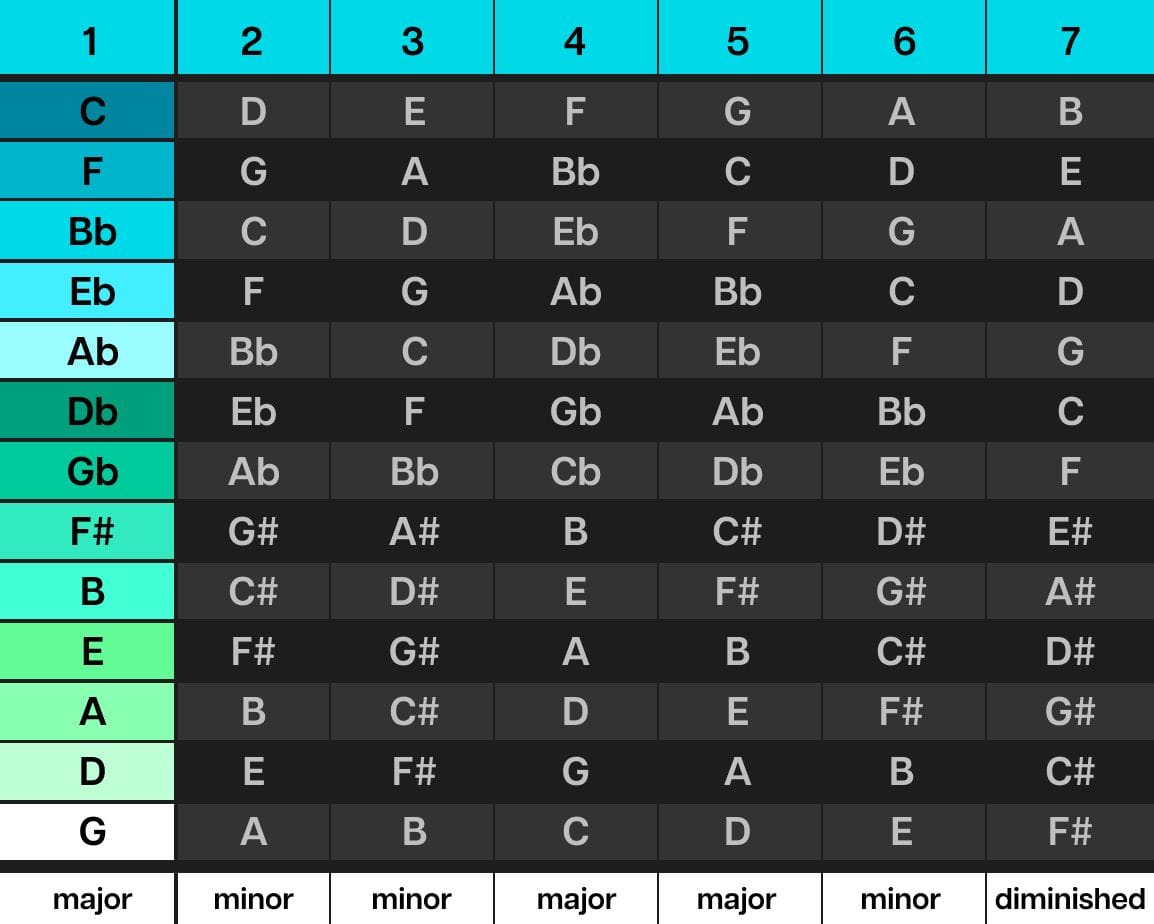
Let’s say you’re trying to learn a song and the song uses A minor, C & F major, D & G minor, you would look over this chart and see which key uses all of these chords. While it may be possible some will overlap, only one will use all.
However, occasionally they won’t all match perfectly. It is normal for artists to include chords that don’t fit perfectly into one key, use your best judgement and intuition. There will always be one key that fits best!
By becoming more familiar with musical keys, whether through your own practice or using a song key finder, you’ll spend less time on the technicalities and more time creating. While potentially tedious at the beginning, just take your time in learning and developing this new skill. When you practice and take time to develop your musical muscles, eventually these things will come quicker and easier.
Here at Moises we constantly strive to bring education and creative energy to artists across the world, so tell us, are there any methods you use to identify a song’s key that we missed? Let us know in the comments below!