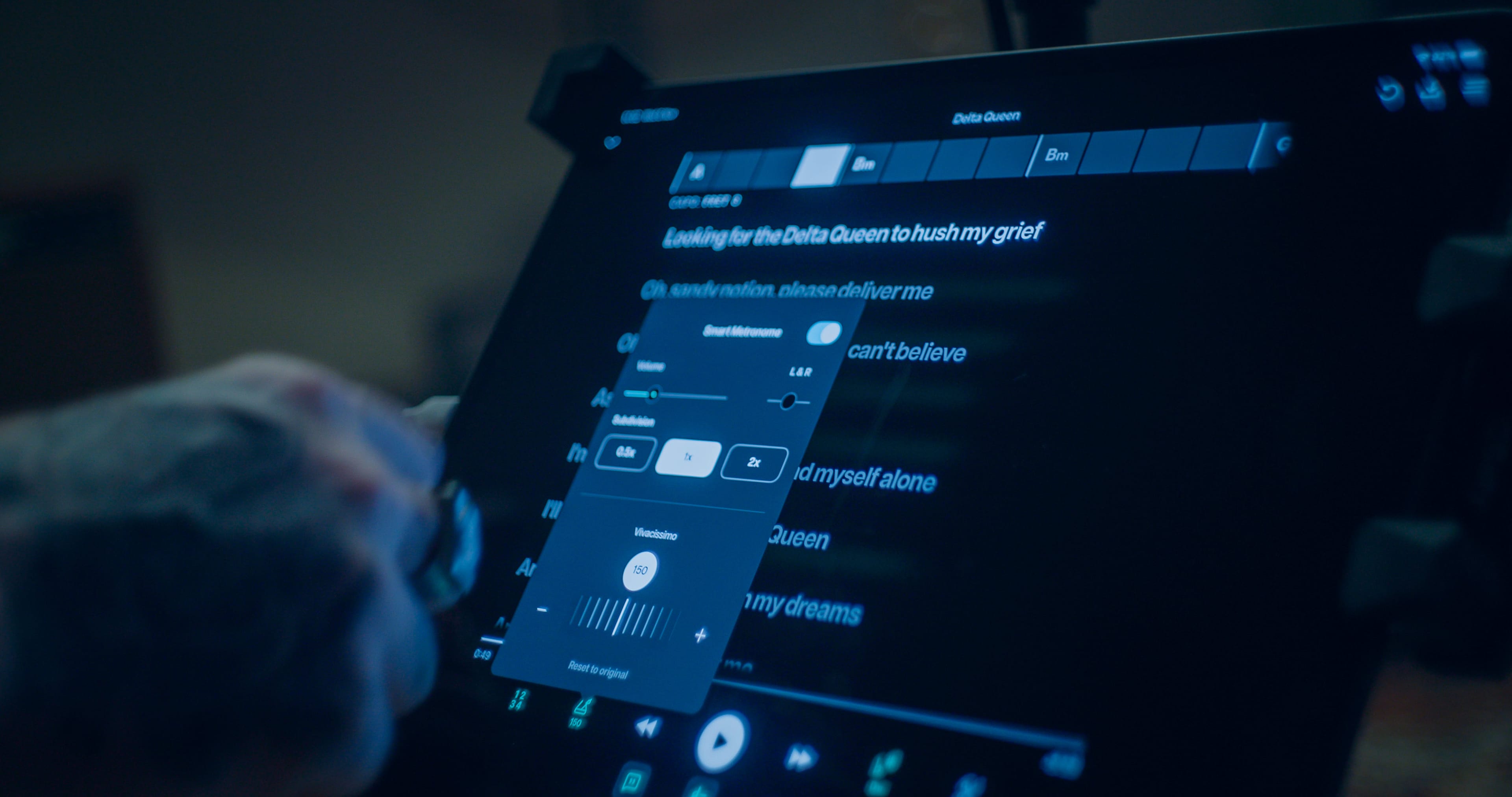
At the USC Thornton School of Music, Dr. Candice Mattio is helping future music educators think more expansively about composition, creativity, and the role of emerging technologies. As the coordinator of USC’s graduate program in Popular Music Teaching & Learning, her work sits at the intersection of pedagogy, music tech, and analytical listening.
Her approach to AI? Open, intuitive, and curiosity-driven.
“AI isn’t a threat to creativity - it’s a catalyst for it.”
For Dr. Mattio, AI isn’t a threat to creativity—it’s a catalyst for it. “Most of what I teach is electronic music,” she explains, “so we’re already working in digital environments. AI becomes one more layer of possibility.”
Rather than treating AI as a standalone subject, she integrates it into the creative process. Whether composing, improvising, or experimenting with sound design, students explore how AI can expand—not replace—their musical thinking.
Using tools like Moises, students isolate stems, examine arrangements, and better understand how parts function within a full composition—bridging theory and real-world music through hands-on analysis.
From Analysis to Creation
In Dr. Mattio’s classroom, analysis becomes a springboard for creation. After breaking down structure, harmony, and production, students reinterpret and rebuild what they hear.
This creates a fluid workflow where analysis and creativity are intertwined—students aren’t just learning how music works, they’re actively shaping it.
Making Space for Student-Led Discovery
A core element of her approach is giving students permission to explore. Rather than prescribing how tools should be used, she creates space for curiosity, iteration, and experimentation.
Through improvisation, composition, and in-the-box production, students develop their own creative and analytical processes—building fluency not just in music, but in the tools shaping its future.
Takeaway for Educators
Dr. Mattio’s approach reflects a key shift: composition analysis can be interactive, exploratory, and directly tied to creation.
Educators don’t need to overhaul their curriculum to integrate AI. By introducing tools that let students isolate, analyze, and experiment with real music, they can create more engaging, intuitive learning experiences.
At Moises, we believe AI can make composition analysis more immediate and musical—helping students connect what they hear to what they create.
About Candice Mattio
Dr. Candice Mattio is an Assistant Professor at the USC Thornton School of Music, where she serves as Lead Faculty for the graduate program in Popular Music Teaching & Learning. Her work focuses on contemporary music pedagogy, composition, and creative practice in digital environments.
Known for her student-centered and exploratory approach, Dr. Mattio integrates emerging technologies—including AI-powered tools like Moises—into her teaching to support composition analysis, experimentation, and creative development. Through her work, she helps students build both analytical listening skills and creative confidence in an evolving musical landscape.
—
Interested in bringing AI into your curriculum?
Explore Moises for Educators here.