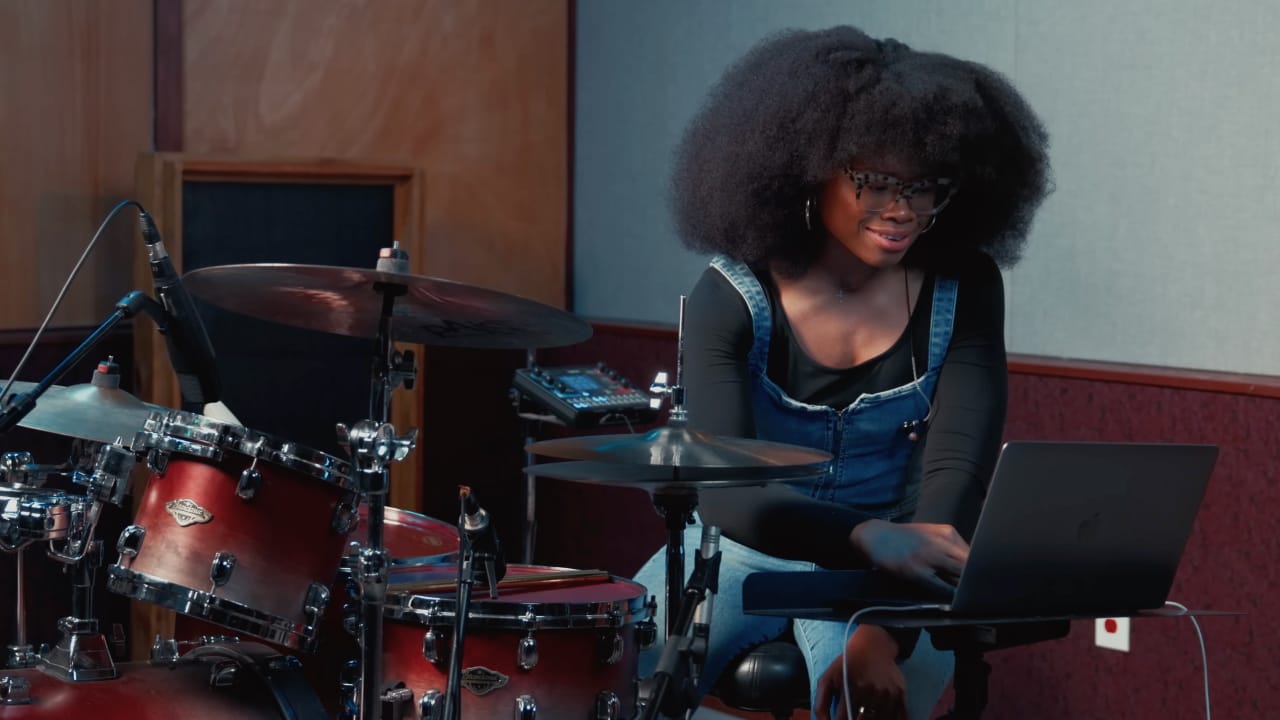
The part that kept me busy
We all have that one part we really want to learn, but there's so much going on in the recording that it's almost impossible to hear all the details. Maybe it is buried deep in the mix, or it's competing with too many instruments playing at once. The fact is that a song like that requires you to sit down and put intention behind every effort to learn it.
Some time ago, I had a track exactly like that: the mix was too busy for me to tell what the drums were actually doing. So I'd listen to it a few times, put in some guesswork, and never actually nail it.
The turn: stop guessing, start practicing it intentionally
So I finally decided to stop guessing what the drummer was doing and built a workflow that made sense to me. I uploaded the song to Moises so I could pull it apart and hear exactly what was happening. That way, I could not only learn every section, but also add my own funk to it. That's the part people usually forget: learning a song you love isn't about copying it part by part, but making it yours by adding your own elements and influences. Here's how I did it, start to finish, with Moises.
Pull the drums out and actually hear them
First, I dropped the track into Moises and separated each instrument into its own part: bass, the wind section, and the drums broken all the way down to kick, snare, and hi-hat. I turned down the parts that were too loud to build my own mix, then soloed the drums and just listened.
Right away, I heard things that had been buried in the original recording. There was a cowbell locked in with the kick that I didn't even know was there, and suddenly I could hear exactly where the pocket was. That's the whole game. Once you can hear a part on its own, it stops being a mystery and starts being something you can actually learn.
Slow it down until it makes sense
The next problem was speed. At full tempo, it was hard to figure out the exact groove. So I brought the tempo down to sit with it. Moises keeps the pitch exactly where it was, so nothing sounds warped. That way, I could feel how the pattern sat against the kick instead of guessing at it. Even a few beats per minute slower makes it easier to get all the dynamics and the exact chops behind every part.
Loop the hard part and drill it
Then, I zoned in. Moises had already mapped the song into sections: intro, verse, chorus. I just had to set a loop around the part I wanted to dive deeper and let it run.
I turned on the smart metronome to check whether I was sitting in the pocket or playing the part in my own time. The click follows the song's actual tempo, and I added a count-in, a few clicks before playback, so I could reset between reps without scrambling to find beat one. By creating a loop and adding clicks and count-ins, you can establish a much more efficient practice routine than listening to the whole song over and over again.
Build it back up
Once I felt comfortable playing it slow, I started bumping the tempo back up a few clicks at a time. Also, adding the other parts back in helped me have a better idea of what elements I could include in my own interpretation of the rhythm section of the song. There's a moment where everything comes together, and you hit a speed that used to feel impossible. You can get to this point much faster by breaking everything down, step by step, and taking your time to master each part.
Take off the training wheels
Here's the part I didn't expect to love. Once I had it down, I muted the original drums and played along with the rest of the band. It's a completely different feeling, as I'm playing every part I've learned inside the song, hearing how the kick sits with the bass, feeling where the snare lands. That's the thing you can't get by practicing alone, but Moises helps you achieve it by removing the training wheels and letting you play with a band without leaving your room.
Your turn
By separating the song and breaking it down, you can actually hear what's really going on. Slow it down to understand each part, loop it until your hands catch up, and play it back-to-back with the entire band to make the song your own. So, the next time you're stumped or unsure about a part, upload it, break it down, take your time, and add your own flavor to it.
Try it with your own track. Try Moises free!