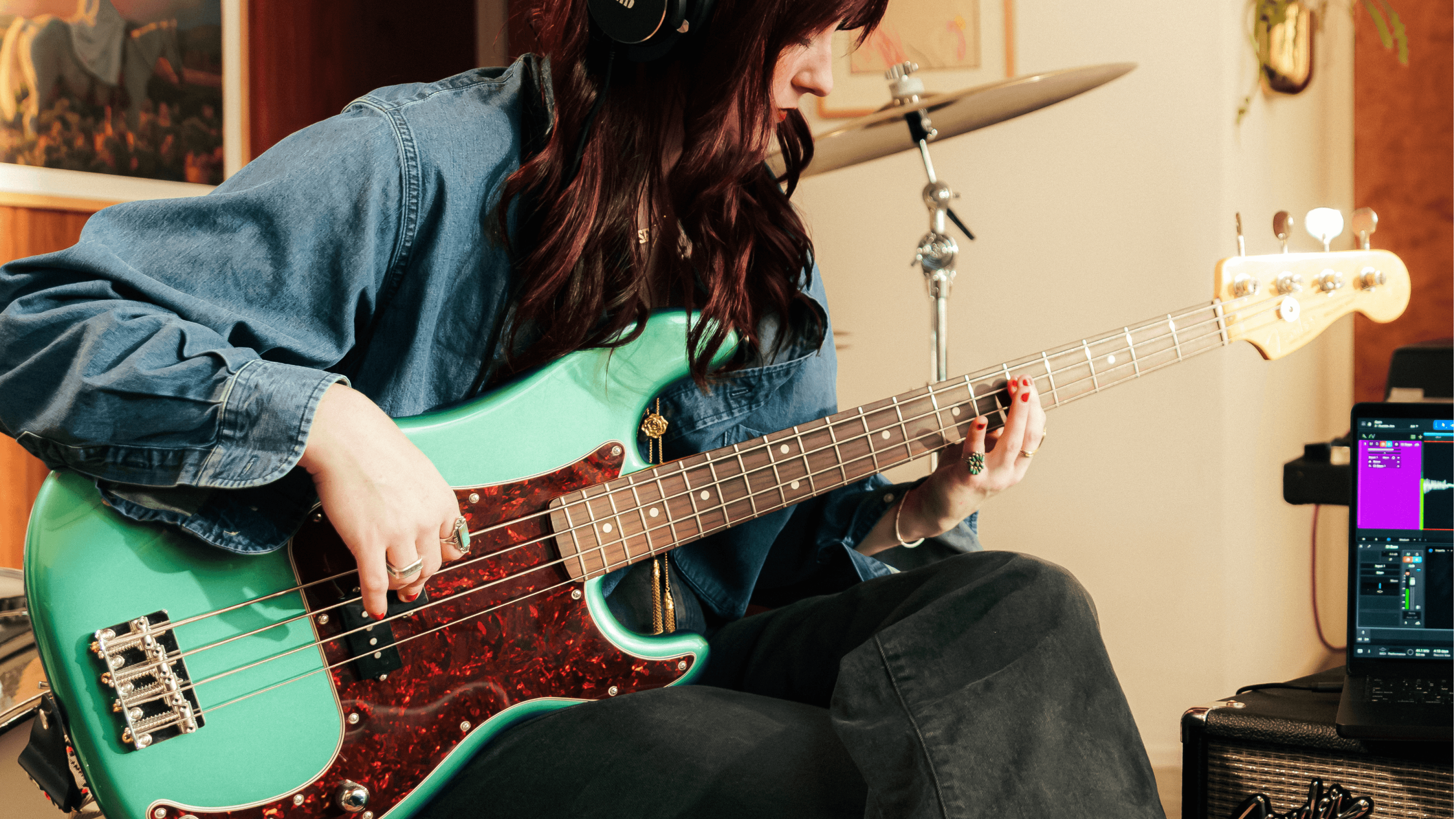
Fender Studio Pro 8.1 is the first Digital Audio Workstation (DAW) to natively integrate Moises Studio workflows for music creation, and that’s a really big deal for musicians everywhere. Music creation, in all its forms, is a beautiful, complex, erratic, deeply human pursuit that thrives on passion, mistakes, happy accidents, and the multitude of instruments and tools at a musician’s disposal.
Music making is more accessible than ever, and the recent advances in AI tools for music production present even more creative opportunities and open up workflows that were simply impossible before. That’s also why it’s more important than ever to ensure that all those creative options can work together to support the act of creation, and that all those technologies continue to respect the fundamental rights of music creators everywhere.
So, instead of trying to replace the whole music production ecosystem with AI, let’s take a look at how it can truly become another amazing tool in the musician’s creative palette. More specifically, let’s discuss what DAWs are, why they matter, and why integrating the right AI tools, such as Moises, is an amazing step forward for all who care deeply about music creation.
What are DAWs and why do they matter?
Over the past 40 years, music production has migrated from complex hardware systems to software-based solutions, essentially bringing the whole recording studio into the computer. The advent of DAWs has created a seismic shift in access to professional-grade production tools and ushered in an era of democratization, where anyone with a personal computer could start producing music with tools similar to those of professionals with comparable sound quality.
A DAW is the software musicians use to record, edit, arrange, and produce music. Think of it as the recording studio on your laptop. Popular options include Ableton Live, Fender Studio Pro, Logic Pro, GarageBand, FL Studio (also known as Fruity Loops), and Pro Tools. Each has its own learning curve and personality, but they all serve the same core purpose: giving you a digital space to build and shape your music.
Originally built either to sequence MIDI instruments together or to emulate the mixing console/tape machine paradigm, DAWs have evolved to incorporate all aspects of music production, from recording to sound editing, processing, mixing, and mastering. Creation also entered the stage with the ability to record and sequence MIDI (to drive hardware synthesizers and drum machines) and, more recently, to use software-based instruments directly in the DAW, as well as to manipulate loops and samples in real time.
Today, the DAW is a core part of most music creation and production workflows. While some creators get inspiration and ideas on the go, using apps on their phones and tablets to record when inspiration strikes, and a few have moved to hardware-only workflows, there is almost always a point in the production process where a piece of music ends up in a DAW.
For beginners, the challenge has always been that DAWs are powerful precisely because they're complex. There are tracks, plugins, effects chains, MIDI sequencers, and audio routing… it can feel overwhelming before you've even recorded a single note. That's where AI tools are stepping in to bridge the gap.
Expanding the DAW with other creative tools
It can be tricky, as DAWs are developed and commercialized by completely different companies, and there is little standardization that would allow the free flow of projects between DAWs. Now, the good news is that processing and software instruments have adopted a plugin format with some degree of standardization.
Even if plugin formats differ slightly (AAX for Pro Tools, VST for many, AU for Mac-specific solutions), the development efforts are typically common, and it’s relatively easy to create plugins for all formats in one fell swoop. Plugins are great; however, the different formats have different capabilities, and their integration with the DAW environment can be limited. Some plugins only have a basic understanding of what the DAW is doing (routing, timeline position, panning), but they don’t have seamless integration with the DAW’s production environment or timeline.
For example, some plugins that base their processing intelligently on the source material have to listen to the whole track in real time before suggesting processing options. In short, they don’t know what’s going on until they have listened to the whole thing.
It is clear that some plugins can greatly benefit from tighter integration with the DAW, especially when it comes to using existing tracks as context for processing, sound selection, and AI-based sound generation. This mostly requires a tight partnership and collaboration between the company creating plugins or creation tools and the company developing the DAW itself.
A novel suite of modern tools for musicians
The Moises platform has evolved into a very powerful toolset for musicians to practice, perform, create, and collaborate. The following areas of functionality, based on years of innovation and passion for music, are only a subset of what Moises has to offer, but are at the top of the list for DAW integration workflows:
Stem Separation
This is where Moises started and developed advanced techniques to separate individual tracks from finished mixes. Imagine being able to access vocals, backing vocals, keyboards, drums, electric guitar, acoustic guitar, bass, strings, etc., from a stereo mix. This opens up incredible possibilities for learning, practicing, and any music creation workflow. Moises continually enhances its models to provide the highest level of separation quality, so much so that many professional producers use it in the studio to speed up their process.
Stem Generation
This is where things get truly exciting when your music needs accompaniment, or you need inspiration to take it further. In practice, this means you can describe the kind of instrument part you want, upload a reference track, and have Moises generate something that actually fits your song musically. You can generate stems based on simple genre/instrument choices, text prompts if you want, and your own audio reference tracks to guide the output.
Voice Studio
For singers and producers working with demos, Voice Studio applies AI voice models to transform vocal recordings. Moises has been vocal (pun intended) about taking an ethical approach here, ensuring the artists whose voices are used are fairly compensated.
Integration with the DAW is the essential next step
As a musician’s companion, Moises enables new creative workflows that both simplify and enhance the creative process. The inclusion of some of its core functionality directly into the DAW environment is one of the most meaningful advances in modern music production.
Fender Studio Pro 8.1 is the first DAW to integrate Moises—specifically its state-of-the-art stem separation technology, voice transformation, and intelligent backing track creation. Imagine having used the voice memo app on your phone (or better yet, Moises!) to record a creative moment. You got the chord progression down on your guitar, and your vocalist friend had some amazing melody ideas. Bring that into Fender Studio Pro, use the built-in Moises stem separation, and you immediately have usable separated vocal and guitar tracks to guide the next stage of recording. Record vocal harmonies and make the track more interesting by transforming them as if other singers had recorded them. Quickly generate accompaniment ideas, such as a bass line or a full, natural-sounding drum track that follows your original idea and anticipates breaks and fills.
That’s all possible directly inside the DAW environment with the Moises integration in Fender Studio Pro 8.1. The creative possibilities are limitless. Moises is at your side to inspire you, fast-track ideas, or challenge your normal creative patterns, while also letting you experiment with all the other tools within the DAW—all your favorite plugins, sample libraries, etc. You’re in the driver's seat of your creative vision, with a musical companion enhancing your creativity.
With all these tools and more inside the Moises app, you can easily get things started on the go, or wherever inspiration strikes, and then seamlessly bring the ideas to the DAW and take them to the next level.
Plus, you can create with complete peace of mind, knowing that Moises’ AI tools have only been trained on fully licensed material, that your own work remains entirely confidential to you, and that there are no limitations on what you can do with the outputs.
No boundaries for your music creation environment—that’s the goal
So there you have it. We are witnessing a new beginning. Connecting the dots between creative tools and respecting the fundamental rights of artists are the two things that matter most, and together they are what will encourage generations of musicians to continue learning, practicing, collaborating, creating, failing, being challenged, being inspired, sharing with the world (or not), and further advancing arguably the most important human pursuit of all.