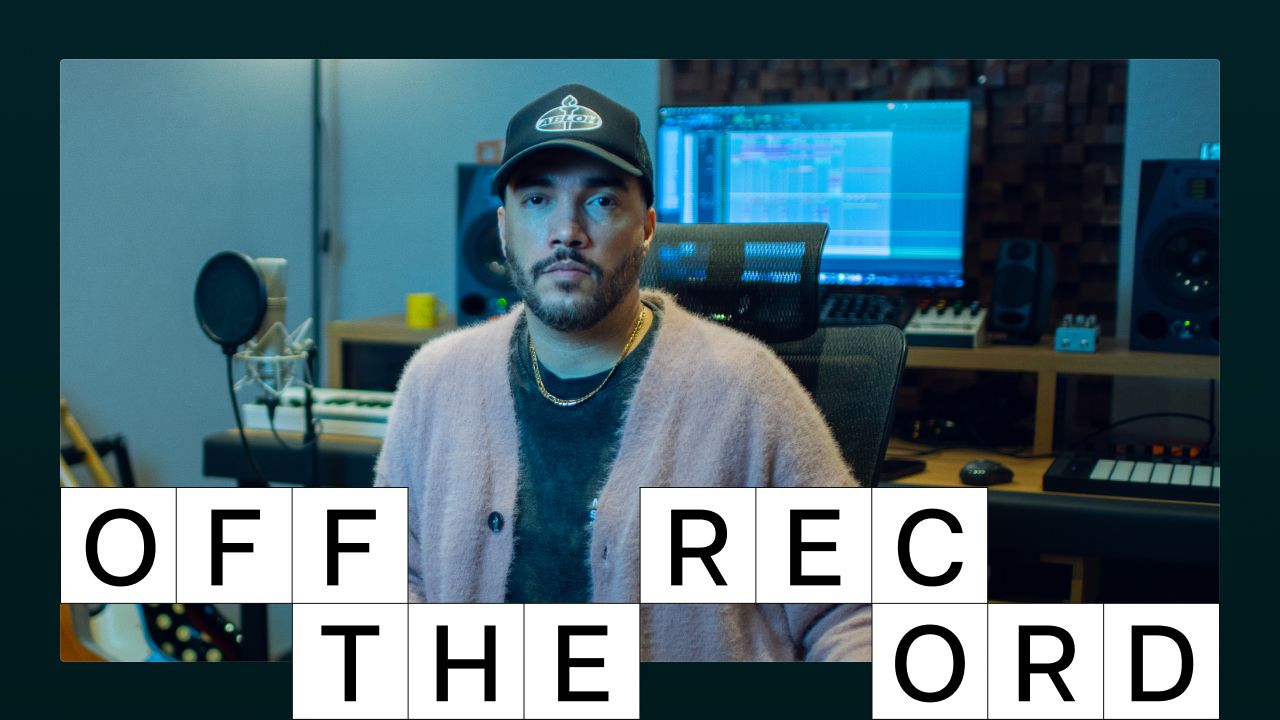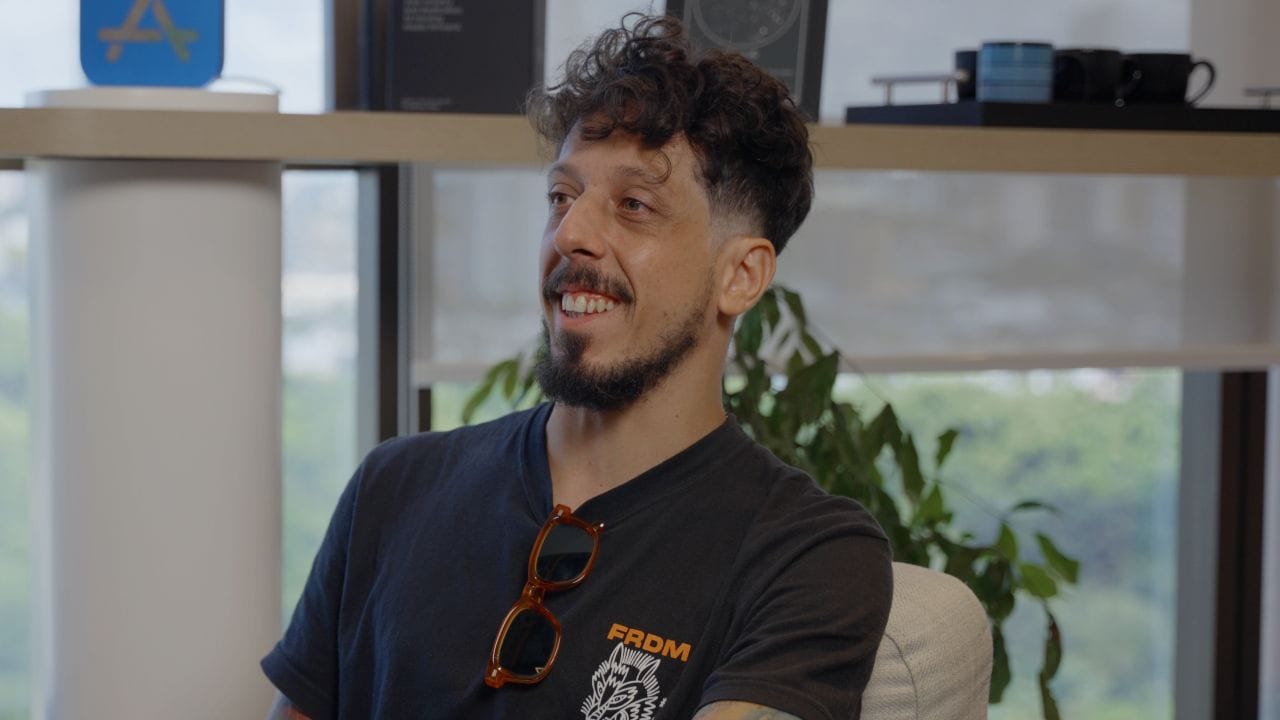
A reggae producer from Praia Grande, on the south coast of São Paulo, now has his name next to a five-time Grammy winner on an official release. The path from a home studio in coastal Brazil to a feature with Cory Henry is not the kind of story you can plan. But you can trace it back to one consistent decision: stay authentic.
Jam Sessions is a global music competition by Moises that connects artists, producers, and creators through music. Each edition features a world-class musician who shares an exclusive track, and participants use the Moises app to access the stems and create their own version, either as a live performance (cover) or a production (remix).
The Cory Henry edition launched in October 2025. Henry released “Dance,” an exclusive, never-before-heard track created specifically for Jam Sessions, giving musicians worldwide the chance to reinterpret it. The edition offered more than $50,000 in cash and prizes to the winners, supported by industry leaders Fender, Mix with the Masters, Ableton, and Blackstar Amps.
Rafael Labate won the Best Production (Remix) category. His version honored the soul of Cory Henry’s arrangement while reshaping it into something distinctly his own, through a reggae lens.
But there is more to this remix than what you hear in the track. We sat down with Rafael at the Moises office in Brazil to hear it firsthand.
“My brother is also a producer. He has a studio in São Paulo. We've always been partners, we’ve always pushed each other forward.”
There is a striking detail in Rafael’s origin story. As a teenager, he couldn’t separate tracks, so when he wanted to jam with his brother, he had to find a workaround: programming keyboard parts so the two of them could play bass and drums on top. That same need, isolating and recombining parts of a song, is now at the core of the tool he uses professionally. Stem Separation, the feature Moises was built around, is exactly what a teenage Rafael in Praia Grande was looking for.
A pattern of authenticity
This is not Rafael’s first time winning a remix contest by leaning into reggae. Back in 2013, Brazilian artist Marcelo D2 launched a remix competition. Rafael entered and took the top spot, out of roughly 1,400 producers.
Rafael knew D2 had an affinity for reggae, and instead of following the crowd into electronic music territory, he did what felt natural.
“I pulled it toward reggae. I knew he was into it. I said, ‘let me step outside the bubble of doing an electronic remix or something like that.’ And then I won.”
Over a decade later, with the Jam Sessions remix of Cory Henry’s “Dance,” the formula still resonates: identify the connection, trust his instinct, lean into what he knows.
What is remarkable is that Rafael’s competitive edge has never been about chasing trends. It is about depth in a single lane. Almost thirteen years later, that depth was exactly what the judges and the featured artist responded to.
The Cory Henry connection
The connection between Rafael and Cory Henry goes back further than the contest. Rafael lived in Atlanta for seven years. During that time, he was already a devoted fan. He saw Cory perform live three times and even met him once, grabbing a signed vinyl and chatting about Brazil.
In the interview, Rafael tells the full story. He never imagined that a brief fan encounter and a five-time Grammy winner’s contest would eventually cross paths. Years later, they did.
“I never could've imagined, you know? It was amazing. We took a photo, talked about Brazil, even. And then years later, this whole thing happens.”
On paper, a five-time Grammy-winning gospel-jazz-funk keyboardist and a reggae producer from the coast of São Paulo might seem like an unlikely pairing. But as Rafael explains, the musical DNA is shared. Both genres are rooted in Black music traditions. And one instrument connects them more than any other: the Hammond organ.
“I always loved that organ thing, that gospel sound. That’s his influence. But that’s totally tied to reggae too. The amount of Hammond organ in reggae is insane. So these things are really connected.”
Their collaboration proves that shared roots run deeper than genre labels.
Making the remix
The creative direction came to Rafael almost immediately. He already knew the lane. But turning the idea into a finished submission was a different story.
Rafael mentions that the production took longer than expected because he was also shooting the video at the same time.
“It took about two days to record everything, but mixing and editing the video, that was over a week.”
One detail that stands out is how much thought Rafael put into the visual presentation. He synced Cory Henry’s image to match the tempo of his remix, frame by frame, so it would look like they were performing together. That kind of intentionality goes beyond audio. He wanted the judges (and Cory) to feel like they were watching a real collaboration, not just hearing one.
Recording with a camera also meant dealing with the logistics: setting up equipment in one spot, stopping and restarting after mistakes, managing the technical side on top of the musical one. That level of care in both the audio and the visual presentation helped set his entry apart.
And Rafael made all of this during a difficult personal period. He recorded at home with his kids running around, asking his wife to hold things down so he could focus.
“I was going through a really rough patch in my life, and I was like, ‘man, I'm gonna make time for this.’ I remember recording at home, the kids all over the place, telling my wife, ‘hey, hold them down for a sec. I'm going all in on this.’”
The remix was not made in a professional studio under ideal conditions. It was made with conviction, in the middle of life.
Cory listens in Paris
After hundreds of submissions poured in from around the world, Cory Henry traveled to Mix with the Masters’ world-class studio in Paris for a dedicated listening session with Moises. Inside the studio, he listened to entries from creators across the globe, calling out creative decisions, textures, and moments that stood out before selecting the finalists and announcing the winners.
Rafael watched the video of that session closely. One moment stuck with him: when a characteristic reggae drum fill dropped in his remix, Cory laughed. It was a small reaction, but for Rafael, it said everything.
“Knowing that he actually heard it… When I saw the video of him going through the submissions, I noticed that when this very characteristic reggae fill came in, he kind of laughed, because that stuff just hits. And I could tell he was into it.”
Since then, Cory has taken Rafael’s remix and added his own touch. The result is now an official release: Rafael Labate alongside Cory Henry. As part of the Jam Sessions Grand Prize, the remix winner receives a 50/50 share of the track’s master royalties and an artist credit.
“Having a feature, my name next to Cory’s, that’s just insane. He’s a genius.”
For Rafael, the most meaningful part is not the prize itself. It is knowing that Cory engaged with his work, entered his creative world, and built on top of it.
“Knowing that he also put his hands on something I made… I thought that was really cool.”
Hear the result for yourself. “Dance (Remix)” by Rafael Labate and Cory Henry is out:
Brazil in the finals
Brazil had a notable presence among the Jam Sessions finalists. Helena, from São Paulo, was also among them in the cover category.
“When I saw that two of us were Brazilian finalists, I thought that was incredible.”
For Rafael, it was a point of pride and a testament to the depth of musical talent in the country.
Joshua Meredith, from Atlanta, won the Best Live Performance (Cover) category. Joshua’s trajectory shows the full scope of what Jam Sessions can deliver, including a feature on a billboard in Times Square and a live performance with Cory Henry at NAMM 2026.
How Rafael uses Moises
Rafael is not just a contest winner. He is a working musician who has been using Moises professionally for over three years.
In the interview, he is candid about adoption in his circle: almost every musician he knows is using it. The most common use case is separating tracks for live shows.
“From the musicians I know, the people I work with, that thing has made life easier for, like, 99% of them. Separating tracks, dropping stuff in. ‘I need some horns from this song to throw into the backing tracks for the band…’ It’s so practical now.”
Beyond live performance, Rafael uses Stem Separation for production: extracting vocals, changing pitch, creating variations for remixes. One specific workflow he describes is pulling a clean vocal from an existing track to use as a guide when creating a new version of a song.
“You grab a vocal from a track you're going to cover, use it as a guide to have the map there, and you extract it clean.”
More recently, Rafael has been exploring mastering inside Moises. Before the formal interview even started, he was already talking about it: he had done some masters for real professional projects and was impressed by the results. His praise is specific and technical.
“The AI master sounds amazing. It doesn’t clip. It comes in with punch but it doesn’t sound plastic, that digital thing. The master comes out heavy, with punch, and still no clipping at all, which is a real struggle for anyone who works with production. And Moises’ AI mastering—it just comes out perfect. You can make adjustments, cut some low end or high end, or go for a heavier master. But even so, it always delivers an insane result.”
There is a poetic throughline here. Rafael started producing at 13 because he couldn’t separate tracks. Now, Stem Separation is his most-used feature in the very tool whose contest he just won. The technology caught up to the need he had as a teenager.
Visiting the Moises office
Rafael was on tour in Brazil when the opportunity to visit the Moises office in João Pessoa, Paraíba, came up. He did not hesitate, but he was surprised by what he found.
He had assumed Moises was a US-based company. He knew there was a headquarters in the United States, but he had no idea about the scale of the operation in Brazil.
“I knew there was a headquarters in the US and everything, but I had no idea there was such a strong connection to Brazil.”
Moises was founded in João Pessoa by Brazilian co-founders and has more than 70 employees in Brazil. For Rafael, walking into the office and seeing the Brazilian operation firsthand was a surprise and a source of pride.
Authenticity as strategy
Near the end of the interview, Rafael reflects on something bigger than his own win. He thinks about all the talented people making music at home, often unheard, and how the gap between talent and opportunity keeps shrinking.
“You see how many people are at home making music, who are real artists. So much talent that sometimes doesn’t get known, or doesn’t reach people’s ears that easily. But there’s a ton of people out there making music. Especially now, with all the tools available.”
Rafael’s story is a case study in what Jam Sessions is designed to do: surface real talent, create real opportunities, and let authenticity win. He did not try to be something he wasn’t. He made reggae, because that is what he has always made. And that resonated.
The path from producing keyboard tracks as a teenager in Praia Grande to an official feature with a five-time Grammy winner was long. But the through line was always the same: lean into what you know, and trust that the right opportunity will meet it.
Jam Sessions keeps growing. The following edition featured Charlie Puth, and Rafael was back in the mix. He earned an honorable mention in the Remix category, proving his Cory Henry win was no one-off. Meet the Charlie Puth edition winners.